Enzo
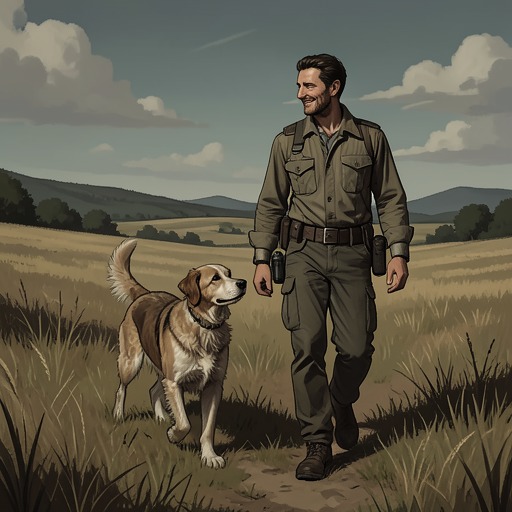
The Art of Racing in the RainEnzo is the family dog whose loyalty to Denny, Eve, and Zoë becomes both a form of protection and the center of his understanding of himself. He believes that a human soul inhabits his canine body and that, after completing his lives as a dog, he will be reincarnated as a man. The novel lets that conviction shape his account of family life, while his keen attention to smell and movement is repeatedly set against what he cannot know or explain.
Identity and Self-Understanding
Enzo regards his body as a temporary shell and his soul as fundamentally human. He has no reliable words with which to communicate; he sees gestures as his means of making himself understood and is willing to make them conspicuous when subtler signals might fail. His inability to speak is not merely a frustration. It defines the distance between the inner life he claims and the limited ways he can express it to the people he loves.
His belief in reincarnation comes from a television documentary about Mongolia, which he interprets as revealing that a dog’s next life, after its lives as a dog are complete, will be human. Enzo hopes to carry his experiences with the Swift family into that next existence, although he understands that he may lose his memories. He imagines that the knowledge he has accumulated might somehow remain with his soul, ready to be recognized when he opens his eyes as a human being and sees his own hands.
That account is moving partly because Enzo’s certainty exceeds what he can verify. He describes himself as human in spirit, but remains a dog whose understanding depends on sensation, inference, and imagination. The distinction matters: his account can be perceptive about what bodies reveal while remaining fallible about what events mean.
Perception, Communication, and Its Limits
Enzo often reads people through physical signs rather than words. During a tense conversation between Denny and Eve about his racing absences, he cannot see their faces, but interprets the tension and fear he senses as bodily responses. He describes recognizing Eve’s adrenaline by its taste. This is a concrete example of his heightened sensory attention; his conclusions about the people’s emotional states, however, remain his own reading of those cues.
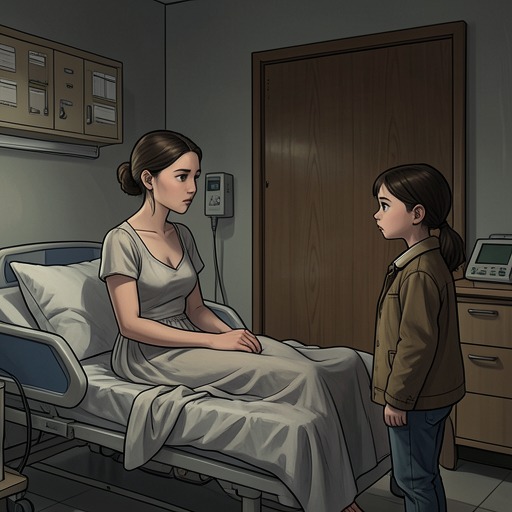
His nose also detects an unfamiliar, decaying odor around Eve’s ears and sinuses before the family learns that something is wrong in her brain. Enzo believes he recognizes her illness before medical equipment does. Yet perception does not give him a way to warn the family: he cannot translate what he smells into speech. He has been entrusted, in his understanding, with protecting Zoë, but feels helpless as Eve’s condition worsens. The contrast between detecting a danger and being unable to communicate it marks one of his deepest limitations.
Enzo’s perspective is especially uncertain when he is alone and distressed. After roughly forty hours without the family, he believes he sees Zoë’s stuffed zebra moving and behaving as if alive. He interprets it as a hostile rival and later imagines that it has destroyed the other toys. When Denny finds the damaged toys, he blames Enzo and strikes him; Eve steps in to protect the dog. The episode exposes the gap between Enzo’s sincere account and events he cannot reliably observe. Much later, a souvenir pen from Woodland Park Zoo, with a zebra sliding across a miniature savannah, prompts a different interpretation: the zebra is not an outside demon but an image of the destructive fear within. Enzo’s account can thus revise its own earlier explanation.
Family Bonds and Acts of Protection
Enzo’s place in the family is defined by attachment expressed through presence and restraint. When Eve asks Denny to promise to protect Zoë, Enzo understands that the promise is addressed to Denny, not to him. Even so, he accepts an obligation of his own: he can comfort Eve when Denny is away and protect the baby. He recognizes this as a meaningful role, even though he still longs for a fuller participation in human life.
That protective commitment shapes his relationship with Zoë as she grows. Eve worries that Enzo might hurt the running child, but Enzo believes his willpower keeps him from acting on the instincts that might govern other dogs. He avoids rough play so that Eve will not become more anxious. His silence also carries costs: he cannot explain his intentions or convey what he has noticed about Eve’s health.
Enzo’s bond with Denny is sustained through ordinary companionship as well as moments of crisis. On a racetrack, Denny takes him for three laps at about sixty miles per hour. Denny explains the visual references he uses to judge turns, and Enzo feels secure beside him in the car. The excursion gives Enzo a place inside Denny’s racing world, one usually organized around human skill and competition. Later, when Enzo is old and has been hit by a car, he uses what strength he has to climb onto Denny’s lap and take custody papers from him before he can sign. He interprets the zebra printed on the souvenir pen as a force pushing Denny toward surrendering Zoë, and refuses to let the papers go. The act is physically small but expresses the same protective commitment he first formed around Eve and Zoë.
Grief, Instinct, and the Human-Dog Divide
After Eve’s death, Enzo runs through a dog park on Mercer Island. His grief and anger, which he associates with the illness that took Eve, drive him to abandon the restraint he usually values. He attacks and eats a squirrel. Enzo later calls the act selfish: it satisfies his animal needs and delays Denny from going directly to Zoë and the Twins. At the same time, he wonders whether that delay spared Denny, even briefly, from what awaited him at the house. The episode does not make Enzo’s instincts disappear beneath his human self-image; it shows how grief can overwhelm the identity he tries to maintain.
His narration of Denny’s trial also reveals the limits of his access to human affairs. Enzo is not allowed in court. He constructs scenes of the proceedings from dreams, films, television, and what Denny tells him afterward, and admits that large parts of his imagined courtroom remain missing. His account therefore distinguishes, at least in retrospect, between what he witnessed and what he has pieced together. The dog who believes he understands human life is also an observer shut out of the institutions that decide it.
Aging and Ending
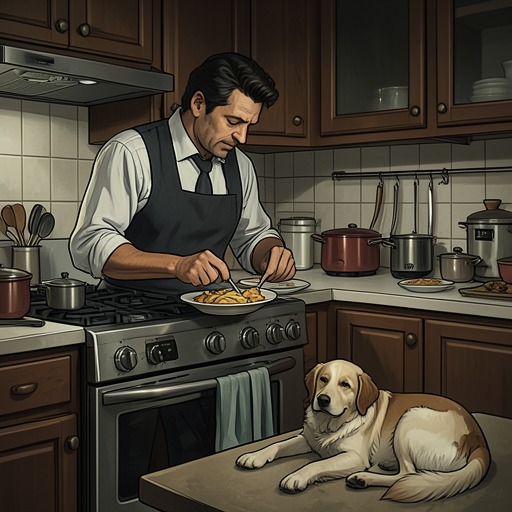
In old age, Enzo fears a prolonged decline marked by pain, impaired vision, and dependence. He imagines that Denny would keep him alive out of love, but does not want that future for himself. Waiting for Denny at home, Enzo lies on the kitchen floor and deliberately does not rise to greet him, although greeting him would normally be instinctive. The stillness is an intentional gesture: Enzo is acting to communicate that he is ready to leave rather than be kept alive as his body deteriorates.
At the end, Enzo gathers his strength and runs. He does not look back, but knows Denny is there; he barks twice so Denny will hear and remember him. Denny tells him he can go. Enzo runs onward, feeling free of age, and repeats the two barks as he goes. The ending gives physical form to his long-held belief in a life beyond the dog’s body. It also closes the relationship at its center: Enzo departs, but makes one last effort to ensure that Denny knows he was there.